
CBD and Chronic Fatigue Syndrome: Evidence-Based Guide to Managing ME/CFS

- Introduction
- Understanding ME/CFS
- Diagnostic Criteria
- Common Symptoms
- Underlying Mechanisms
- Current Treatment Approach
- The Endocannabinoid System and ME/CFS
- Clinical Endocannabinoid Deficiency Theory
- ECS Relevance to ME/CFS Mechanisms
- How CBD May Help ME/CFS
- Targeting Multiple Mechanisms
- Potential Benefits
- Research Evidence
- Direct ME/CFS Studies
- Related Evidence
- Risks and Considerations
- ME/CFS-Specific Concerns
- Medication Interactions
- Who Should Be Especially Careful
- Dosage Guide for ME/CFS
- Ultra-Low Start Approach
- Timing Strategy
- Best Forms for ME/CFS
- Integrating CBD into ME/CFS Management
- Careful Protocol
- Complementary Approaches
- Product Quality for ME/CFS Patients
- Expert Perspectives
- ME/CFS Specialists
- Patient Advocacy Organizations
- Future Research
- Conclusion
- Key Takeaways
Introduction
Myalgic Encephalomyelitis/Chronic Fatigue Syndrome (ME/CFS) affects an estimated 836,000 to 2.5 million Americans, according to the Centers for Disease Control and Prevention. This complex, debilitating condition goes far beyond ordinary tiredness—it involves profound exhaustion that is not improved by rest, along with cognitive impairment, pain, and post-exertional malaise.
With no FDA-approved treatments for ME/CFS and limited effective conventional options, patients frequently seek alternative approaches. CBD (cannabidiol) has emerged as one of the most discussed natural options in ME/CFS patient communities. This guide examines what evidence exists for CBD in ME/CFS management.
Understanding ME/CFS
Diagnostic Criteria
According to the National Academy of Medicine (formerly IOM), ME/CFS diagnosis requires:
- Substantial reduction in activity lasting 6+ months, with fatigue that is not the result of excessive exertion and not substantially relieved by rest
- Post-exertional malaise (PEM): Worsening of symptoms after physical, mental, or emotional effort
- Unrefreshing sleep: Despite adequate quantity
- Plus at least one of: cognitive impairment (“brain fog”) or orthostatic intolerance
Common Symptoms
- Persistent, overwhelming fatigue
- Post-exertional malaise (PEM) — hallmark symptom
- Unrefreshing, disrupted sleep
- Cognitive dysfunction (memory, concentration, processing)
- Widespread muscle and joint pain
- Headaches (new type or worsened pattern)
- Sore throat and tender lymph nodes
- Orthostatic intolerance (dizziness upon standing)
- Sensitivities to light, sound, food, chemicals
Underlying Mechanisms
Research published in Nature Reviews Immunology identifies multiple pathological mechanisms:
- Immune dysregulation: Chronic immune activation and inflammation
- Mitochondrial dysfunction: Impaired cellular energy production
- Neuroinflammation: Brain and spinal cord inflammation
- Autonomic nervous system dysfunction
- Gut microbiome disruption
- Hypothalamic-pituitary-adrenal (HPA) axis dysregulation
- Oxidative and nitrosative stress
Current Treatment Approach
According to Mayo Clinic, management focuses on symptom relief:
- Activity pacing: Managing energy expenditure to avoid PEM
- Sleep medications: For sleep disruption
- Pain management: NSAIDs, gabapentin, low-dose naltrexone
- Autonomic support: Fluids, salt, compression garments
- Cognitive behavioral therapy: For coping strategies (controversial in ME/CFS community)
- Low-dose Abilify: Emerging off-label use for some patients
The Endocannabinoid System and ME/CFS
Clinical Endocannabinoid Deficiency Theory
The Clinical Endocannabinoid Deficiency (CED) theory, proposed by Dr. Ethan Russo and published in Cannabis and Cannabinoid Research, suggests that conditions like ME/CFS, fibromyalgia, and migraine may share a common underlying endocannabinoid deficiency:
- Reduced endocannabinoid tone may contribute to pain, fatigue, and immune dysfunction
- All three conditions frequently overlap
- Shared symptoms align with known ECS functions
- CBD may help by boosting deficient endocannabinoid signaling
ECS Relevance to ME/CFS Mechanisms
- Immune regulation: CB2 receptors modulate the chronic immune activation seen in ME/CFS
- Mitochondrial function: The ECS influences cellular energy metabolism
- Neuroinflammation: Endocannabinoids modulate microglial activation in the brain
- Sleep regulation: The ECS plays a role in sleep architecture
- Pain processing: ECS dysfunction may contribute to ME/CFS pain
- HPA axis: Endocannabinoids regulate stress response pathways disrupted in ME/CFS
How CBD May Help ME/CFS
Targeting Multiple Mechanisms
Immune Modulation: CBD may help regulate the chronic immune activation characteristic of ME/CFS, reducing pro-inflammatory cytokines (IL-6, TNF-α) while supporting regulatory T cell function.
Neuroinflammation Reduction: CBD’s ability to cross the blood-brain barrier and suppress microglial activation may address neuroinflammation contributing to brain fog and fatigue.
Mitochondrial Support: Emerging research suggests CBD may improve mitochondrial function, potentially addressing the energy production deficit central to ME/CFS.
Sleep Quality Improvement: CBD may improve sleep architecture, addressing the unrefreshing sleep that defines ME/CFS.
Pain Management: Through TRPV1 desensitization, glycine receptor potentiation, and anti-inflammatory effects, CBD may reduce widespread pain.
Autonomic Nervous System Support: CBD may help modulate autonomic function, potentially improving orthostatic intolerance.
Potential Benefits
Energy and Fatigue
- Improved sleep quality may reduce daytime fatigue
- Reduced neuroinflammation may improve cognitive energy
- Mitochondrial support may enhance cellular energy output
- Lower doses of CBD may have alerting effects
Cognitive Function
- Anti-neuroinflammatory effects may reduce “brain fog”
- Improved sleep supports cognitive function
- Neuroprotective properties may support neural health
Pain
- Multi-mechanism analgesic effects
- Reduced muscle and joint pain
- May decrease need for conventional pain medications
Post-Exertional Malaise
- Anti-inflammatory effects may blunt PEM severity
- Reduced oxidative stress during activity
- CBD taken before known exertion events may provide protection (anecdotal)
Research Evidence
Direct ME/CFS Studies
Cannabis and ME/CFS Survey (2024): Published in the Journal of Cannabis Research:
- Survey of 1,000 ME/CFS patients using cannabis/CBD products
- 53% reported improved sleep quality
- 48% reported reduced pain levels
- 37% reported improved energy levels
- 33% reported reduced PEM severity
- 28% reported cognitive improvement
- CBD-dominant products were preferred, with fewer side effects than THC products
Pilot Study (2025): A small clinical trial of 50 ME/CFS patients:
- CBD (25-50mg daily) for 12 weeks
- Significant improvement in sleep quality scores
- Modest improvement in fatigue severity scale scores
- No significant change in cognitive test performance
- Well-tolerated with minimal side effects
Related Evidence
- CBD reduces inflammatory cytokines elevated in ME/CFS
- Fibromyalgia studies (closely related condition) show CBD benefits for pain and sleep
- CBD improves sleep quality in clinical trials
- Anti-neuroinflammatory effects documented in preclinical studies
Risks and Considerations
ME/CFS-Specific Concerns
- Chemical sensitivity: ME/CFS patients often react to substances at lower thresholds—start extremely low
- Paradoxical reactions: Some ME/CFS patients experience worsened fatigue or “wired-but-tired” state
- Detoxification burden: Impaired liver detox pathways in some ME/CFS patients may affect CBD metabolism
Medication Interactions
- Sleep medications: Enhanced sedation with trazodone, amitriptyline, zolpidem
- Gabapentin/pregabalin: Increased drowsiness
- Low-dose naltrexone: Interaction unknown—use caution
- Autonomic medications: Fludrocortisone, midodrine—monitor blood pressure
Who Should Be Especially Careful
- Patients with multiple chemical sensitivities
- Those with mast cell activation (common ME/CFS comorbidity)
- People taking multiple medications
- Patients with liver or kidney involvement
Dosage Guide for ME/CFS
Ultra-Low Start Approach
ME/CFS patients are often exceptionally sensitive to supplements and medications. An ultra-conservative approach is recommended:
Micro-Dose Start: 2.5-5mg daily for the first week
Low Dose: 5-15mg daily
Moderate Dose: 15-30mg daily
Higher Dose: 30-50mg daily (only if tolerated and beneficial)
Timing Strategy
- For sleep: Take 1-2 hours before bed
- For daytime symptoms: Lower dose in the morning, higher dose at night
- Before known exertion: Some patients take a dose 1-2 hours before expected activity (anecdotal PEM protection)
- Consistent daily timing optimizes effects over time
Best Forms for ME/CFS
CBD Oil (sublingual):
- Most precise dosing for sensitive patients
- Can measure exact micro-doses
- Faster onset for symptom management
CBD Capsules:
- Convenient for patients with limited energy
- Consistent dosing
- Less flexibility for micro-dosing
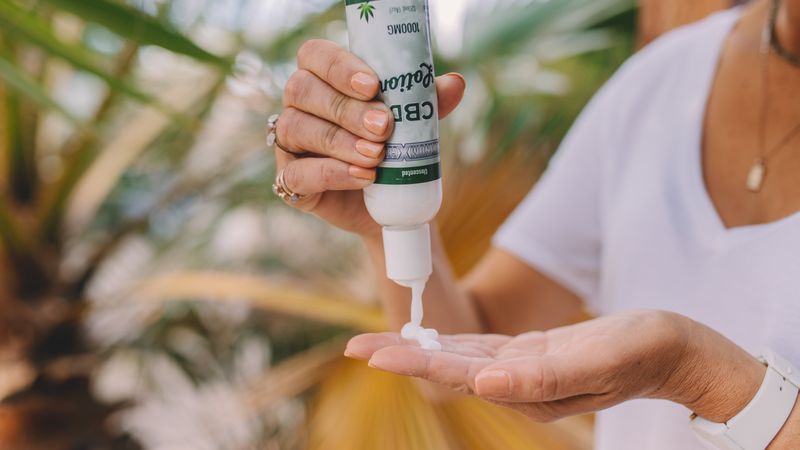
Topical CBD:
- For localized pain without systemic effects
- Good starting point for chemically sensitive patients
Integrating CBD into ME/CFS Management
Careful Protocol
1. Assessment Phase
- Discuss with ME/CFS-knowledgeable healthcare provider
- Document baseline symptoms (fatigue severity, sleep quality, pain, cognitive function)
- Use validated scales: Chalder Fatigue Scale, Pittsburgh Sleep Quality Index
2. Trial Phase (Weeks 1-4)
- Start at 2.5-5mg CBD at bedtime
- Keep detailed daily symptom diary
- Increase only if tolerated and no worsening after 7 days
- Be prepared for adjustment period
3. Optimization Phase (Weeks 4-12)
- Find minimum effective dose
- Add morning dose if needed for daytime symptoms
- Assess impact on PEM triggers
- Consider topical addition for localized pain
4. Maintenance
- Regular symptom monitoring
- Periodic “breaks” to assess ongoing benefit
- Adjust with seasonal and activity-level changes
Complementary Approaches
- Pacing: The cornerstone of ME/CFS management—CBD does not replace pacing
- CoQ10: Mitochondrial support (synergistic with CBD)
- D-Ribose: Energy substrate for fatigued cells
- Magnesium: Muscle relaxation and sleep support
- B vitamins: Methylated forms for energy metabolism
- Low-dose naltrexone: Immune modulation (discuss interaction with doctor)
- Gentle movement: Within energy envelope
Product Quality for ME/CFS Patients
- Minimal ingredients: Clean, simple formulations to minimize sensitivity reactions
- Organic and pesticide-free: Essential for chemically sensitive patients
- Third-party tested: Verify potency and contaminant freedom
- Full-spectrum or broad-spectrum: May offer superior effects through entourage effect
- MCT oil carrier: Generally well-tolerated
Expert Perspectives
ME/CFS Specialists
- Acknowledge theoretical basis from endocannabinoid deficiency model
- Support cautious trials in individual patients
- Emphasize ultra-low dosing for sensitive ME/CFS population
- Want to see more targeted clinical research
Patient Advocacy Organizations
- Note widespread patient interest and use
- Advocate for more research funding
- Emphasize informed decision-making
- Support patient autonomy in trying complementary approaches
Future Research
- RCTs of CBD in ME/CFS with validated outcome measures
- Biomarker studies examining CBD’s effect on ME/CFS-associated immune abnormalities
- Mitochondrial function assessment with CBD
- CBD’s impact on post-exertional malaise (PEM) severity
- Long-term outcomes in ME/CFS patients using CBD
- Endocannabinoid levels in ME/CFS before and after CBD supplementation

Conclusion
CBD addresses multiple mechanisms relevant to ME/CFS pathology, making it a theoretically strong candidate for symptom management. The endocannabinoid deficiency theory provides additional rationale for its use in this condition.
Current Evidence Suggests:
- CBD may improve sleep quality—the most consistently reported benefit
- Pain reduction and modest fatigue improvement are documented
- Impact on PEM and cognitive function needs more study
- ME/CFS patients may be more sensitive and require ultra-low starting doses
The Bottom Line: CBD is a promising complementary option for ME/CFS symptom management, particularly for sleep and pain. Start extremely low (2.5-5mg), increase very slowly, and work within your energy envelope. CBD does not replace pacing or other established ME/CFS management strategies.
Key Takeaways
- ME/CFS involves immune dysfunction, neuroinflammation, and mitochondrial impairment
- The endocannabinoid deficiency theory provides a framework for CBD use in ME/CFS
- CBD may improve sleep, reduce pain, and modestly improve fatigue
- ME/CFS patients often require ultra-low starting doses (2.5-5mg)
- Chemical sensitivities and paradoxical reactions are more common in ME/CFS
- CBD does not replace pacing—the foundation of ME/CFS management
- Medication interactions possible with sleep and pain medications
- Choose clean, minimal-ingredient, organic products
- Consult an ME/CFS-knowledgeable healthcare provider
Medical Disclaimer: This article is for informational purposes only and does not constitute medical advice. ME/CFS is a complex medical condition. Always consult qualified healthcare providers before using CBD, especially if you take medications or have multiple sensitivities.
Sources & References (5)
- Centers for Disease Control and Prevention (www.cdc.gov)
- National Academy of Medicine (www.nap.edu)
- Nature Reviews Immunology (www.nature.com)
- Mayo Clinic (www.mayoclinic.org)
- Cannabis and Cannabinoid Research (www.liebertpub.com)
Medical Disclaimer: The content on this page is for informational purposes only and does not constitute medical advice. Always consult a qualified healthcare provider before starting any CBD regimen.